


We’ve got you covered with this comprehensive guide on mastering forex risk management strategies for 2026. Get ready to dive deep into essential risk management concepts, advanced techniques, and common mistakes to avoid. With this knowledge, you’ll be well-equipped to make informed decisions and improve your trading performance.
Key UK Forex Risk Management Facts
- UK retail forex trading sits under FCA rules that cap leverage at 30:1 on major pairs and require negative balance protection on every retail account.
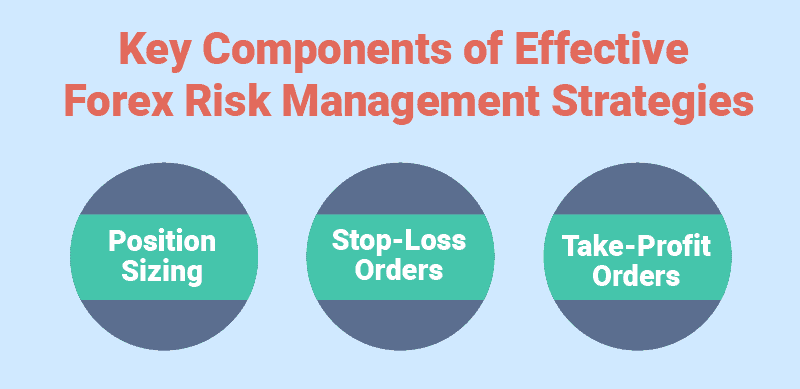
- The three controls that decide whether a UK trader survives are position sizing, stop losses, and take-profit orders. Almost every blown account skips one of them.
- UK residents have a choice between CFDs and spread bets that don’t exist in most other countries. The tax treatment is different and it changes which one suits which trader.
Why risk management matters more for UK retail traders
Every FCA-regulated broker is required to publish the percentage of its retail accounts that lose money. You’ll see the number in the risk warning at the bottom of every UK broker site. It usually sits between 67% and 85%.
That figure isn’t marketing. It’s a fairly accurate read on what happens when retail traders trade leveraged forex without managing risk. Most don’t lose because they picked the wrong direction. They lose because they size too large, run without stops, double down on losers, or use leverage as if it’s a free upgrade to position size.
I’ve been trading since 1998. Before the FCA imposed leverage caps in 2018, UK retail accounts could routinely access 200:1 leverage. The traders who blew up at 200:1 are the same ones who’d blow up at 30:1 today, just slightly more slowly. Risk management is what separates them from the small minority who stay in the market long enough to learn anything useful.
The three controls every UK trader needs
Three things need to be in place before any strategy is worth deploying.
- A fixed percentage you risk per trade.
- A stop loss on every position, set before you click buy.
- A take-profit that defines what success looks like in pounds.
Without these you’re guessing.
Position sizing: stick to 1%
When I first tested high-leverage forex trading years ago, what surprised me most was how quickly small position sizing mistakes escalated during volatile sessions.
As an example, if I was to risk 1%, a string of 10 consecutive losses drops your account by roughly 9.6%. That’s recoverable. At 2%, the same losing streak takes you down 18.3%, and you need a 22.5% gain just to break even. Most retail traders don’t have the equity curve to absorb that drawdown without changing their behaviour, which is when bad decisions start. Now I risk 1% per trade. Not “0.5% to 2%”. One percent.
On a £10,000 account, 1% is £100 of risk per trade. The position size that matches £100 of risk at your chosen stop distance is what you trade. Nothing else.
A worked example on GBP/USD: one standard lot has a pip value of roughly £8 (it floats with the GBP rate). If your stop sits 25 pips away, you’re risking £200 per standard lot. £100 ÷ £200 = 0.5 lots. That’s your position size.
Stop losses: place them where the trade is wrong
Your stop goes where your trade idea is invalidated, not where 1% of your account happens to sit on a pip count. If GBP/USD breaking below 1.2450 means your setup has failed, that’s your stop. Adjust your position size to fit the stop, not the other way around.
The mistake I see most often: traders shrink stops to allow bigger position sizes, get taken out by normal market noise, and then watch the trade work without them. The market doesn’t care about your account balance. Your stop has to live where the chart says, not where the maths is convenient.
Take-profit orders: target 2:1 minimum
Trade with a defined target. A 2:1 reward-to-risk ratio is the floor. Below that, you need a win rate above 50% to break even after spreads and overnight financing, and most retail traders don’t have that win rate.
If you risk 25 pips on GBP/USD, the minimum target is 50 pips. Set it when you set the stop. Then leave it alone.
How FCA leverage caps reshape UK risk management
When the FCA adopted ESMA’s CFD restrictions in 2018 (and confirmed them permanently in 2019), retail UK leverage went from up to 500:1 at some brokers to a hard cap that varies by instrument:
- Major FX pairs: 30:1
- Non-major FX, gold, major indices: 20:1
- Other commodities and minor indices: 10:1
- Individual stocks: 5:1
Crypto CFDs are banned outright for UK retail clients. If a broker offers them to you, you’re either being treated as a professional client (which strips away most of your protections) or you’re on an offshore entity outside FCA jurisdiction.
Two related rules matter as much as the leverage caps themselves.
Negative balance protection. FCA rules now prevent your account from going below £0 with Negative Balance Protection so if a flash crash or weekend gap blows past your stop and leaves you owing the broker more than the cash in your account, the broker has to write off the shortfall. The benefit: you can’t lose more than you deposited. This wasn’t true in January 2015 when the Swiss National Bank removed the EUR/CHF peg overnight and many UK retail accounts went tens of thousands of pounds negative. Now the FCA ensures greater investor protection for UK traders.
50% margin close-out. Brokers must auto-close your positions if your account equity falls to 50% of your initial margin. It stops a single bad trade from chewing through everything before you notice.
If you’ve moved to an offshore broker to access higher leverage, you’ve given up both protections. Worth thinking about what the extra leverage is actually costing you.
For a fuller breakdown of these rules, see our negative balance protection guide.
Spread betting vs CFDs: a UK-only choice that changes your risk maths
UK residents can trade forex two ways: as a CFD or as a spread bet. The mechanics are almost identical. The tax treatment isn’t.
Spread betting profits are tax-free for UK residents. No capital gains tax, no income tax on the profits. The trade-off is that losses can’t be offset against gains elsewhere.
CFDs are subject to capital gains tax above the £3,000 annual exempt amount (2025/26 and 2026/27), at 18% in the basic-rate band and 24% in the higher-rate band on non-property assets after the October 2024 Budget changes. Losses can be carried forward to offset against future gains.
A trader who genuinely expects consistent profits above £3,000 a year is usually better off on spread bets. A trader sitting on CGT losses elsewhere may prefer CFDs to use those losses up. Loss-making traders pay no tax either way, so the question is academic until profitability arrives.
This isn’t risk management in the position-sizing sense. But it changes the effective return on every winning trade, which changes the minimum risk-reward ratio that makes a strategy viable.
Mistakes I see UK traders make repeatedly
After 28 years in the markets the same errors come back every cycle.
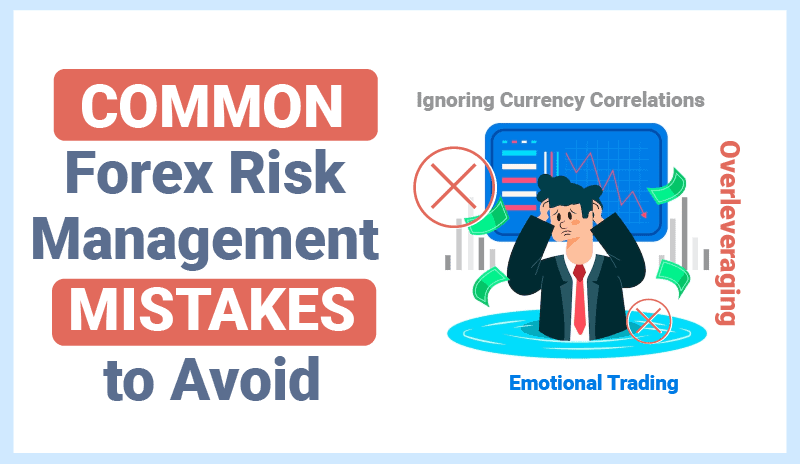
Trading the news without a tested plan is at the top of the list. Bank of England rate decisions, CPI prints, employment data. Volatility looks like opportunity, but it’s a coin flip with wider spreads. If you haven’t tested a strategy on news events, sit it out. The average retail trader is providing liquidity to algos and institutions in those windows.
Doubling down on losers is next. The reasoning is always “the trade is even better at this price.” The reality is you’ve turned a 1% risk into a 2% risk on a position already proving wrong. Every blown account I’ve seen had a martingale phase somewhere in its history.
Trading correlated pairs without realising it. Long GBP/USD plus long EUR/USD isn’t two trades. It’s one bet on dollar weakness, sized double. Long GBP/USD plus short EUR/GBP is the same problem with different paint on it. Pull up a correlation matrix before you open a second position.
Treating leverage as a position-sizing tool. Leverage tells you the margin you need to put up. It doesn’t tell you what to risk. The question is “what’s my pound risk on this trade given my stop”, not “how much can I leverage”. Two completely different calculations.
Taking too many setups burns more accounts than picking the wrong direction does. Five A-grade trades a month with a 50% win rate at 2:1 beats fifty B-grade trades with a 40% win rate at 1.5:1. Most retail traders trade too much and rationalise it as “being active”. Boredom is not an entry signal.
Hedging, correlation, and advanced tools that work on GBP pairs
Once the basics are in place a few advanced techniques start to earn their keep.
Diversification across uncorrelated pairs. Trading GBP/USD, USD/JPY, and AUD/NZD gives real diversification. Trading GBP/USD, EUR/USD, and AUD/USD gives you three correlated USD positions dressed up as three trades. The first portfolio survives a USD shock. The second amplifies it.
Hedging. Used to limit your risk profile by putting on trades that move in opposite directions of each other, hedging has always been useful for swing or position traders who want to neutralise short-term volatility without closing an underlying carry position. Less useful for intraday traders, who are better off just exiting and re-entering. Note that some FCA-regulated brokers don’t allow direct hedging in the same account, which forces you into separate sub-accounts if you want it.
Knowing how GBP pairs actually move. GBP/USD and EUR/GBP have a strong negative correlation. GBP/JPY tends to track GBP/USD on UK news and USD/JPY on US news, which makes it roughly twice as volatile as either parent pair. If you’re sizing positions on GBP/JPY using your normal GBP/USD position sizes, you’re carrying more risk than you think.
What to look for in a UK forex broker for risk management
The platform matters less than the regulatory standing and the boring stuff actually working.
What matters:
- FCA authorisation with FSCS coverage (not just an FCA passport from an EU entity)
- Guaranteed stop losses available even at extra cost for weekend gap risk (and which forex brokers offer guaranteed stop loss orders)
- Reliable order execution on the platform you’ll actually use
- Reasonable spreads on the pairs you trade (especially around news)
- Written confirmation that negative balance protection applies to your specific account type
What doesn’t matter:
- Built-in risk calculators (the maths takes 30 seconds with any calculator)
- The volume of educational content
- Industry awards: these are mostly paid placements
We compare UK forex brokers by regulation, spreads, and execution quality elsewhere on the site. The lowest spread broker comparison is worth a look if you trade frequently enough that spreads materially affect your edge.
Summary
Risk management is the foundation of any strategy worth running. Most retail traders never bother to build it. The 1% rule, a stop on every trade, a target set before you open the position, and an honest read on correlation across your open pairs. Get those right and the FCA rules quietly do the rest.
FAQs
What is the 1% rule in forex trading?
Risk no more than 1% of your account balance on any single trade. On a £10,000 account that’s £100 of maximum loss per position, regardless of how many pips your stop sits away. Position size is whatever maths makes that £100 risk hold given your stop distance.
Are forex profits taxable in the UK?
Depends on the product. Spread betting profits are tax-free for UK residents. CFD profits are subject to capital gains tax above the £3,000 annual exempt amount, at 18% or 24% depending on your income band. If you trade as a business or full-time, HMRC may classify profits as income instead, which is taxed at higher rates. Speak to an accountant if you’re unsure which applies.
What leverage am I allowed in the UK?
FCA retail clients are capped at 30:1 on major FX pairs, 20:1 on non-majors and gold, 10:1 on other commodities, and 5:1 on stocks. Crypto CFDs aren’t available to retail at all. Professional clients (who must pass a wealth and experience test) can access higher leverage, but they give up most retail protections in exchange.
Does negative balance protection work in flash crashes?
Under FCA rules, yes. UK retail clients can’t lose more than the funds in their trading account, regardless of how the loss occurred. The protection doesn’t apply to offshore brokers operating outside FCA jurisdiction, even if they have a UK-facing website.


