
What are the best platforms for trading futures?
Interactive Brokers is the best futures trading platform for US traders, with a rating of 62.3. It requires no minimum deposit and provides advanced order types and wide product access through IBKR Workstation, IBKR Global Trader, and IBKR Mobile. Plus500 is a runner-up, rated 58.8, with low fees and a $100 minimum deposit.
The Best US Platform for Trading Futures
Ordered by our overall rating, highest first; brokers we have not yet scored follow.
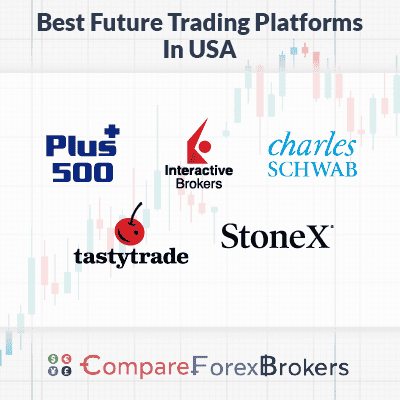
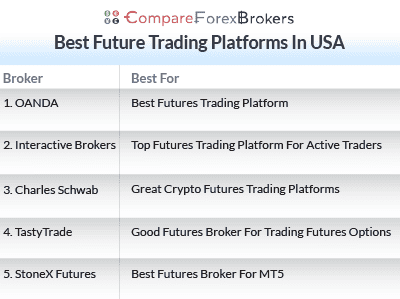
- Interactive Brokers - Top Futures Trading Platform For Active Traders
- Plus500 - Best Futures Trading Platform
- eToro - Best Copy Trading Futures Broker
- Charles Schwab - Great Crypto Futures Trading Platforms
- TastyTrade - Good Futures Broker For Trading Futures Options
- StoneX Futures - Best Futures Broker For MT5
Broker comparison table
| Rank | Broker | Score | Regulation | EUR/USD raw | EUR/USD standard | Commission | Min. deposit | Platforms | Leverage | Visit |
|---|---|---|---|---|---|---|---|---|---|---|
| 1 |  Interactive Brokers Interactive Brokers | 62.3 | NFA, CFTC, CBI ASIC, FCA, MAS CIRO, JFSA | - | - | $2.00 | $0 | - | 30:1 | Visit |
| 2 |  Plus500 Plus500 | 58.8 | CFTC | - | 0.8 | - | $100 | - | 30:1 | Visit |
| 3 |  eToro eToro | 54.9 | FINRA,SEC ASIC,FCA,CySEC | - | 1 | - | $50 | - | - | Visit |
| 4 |  Charles Schwab Charles Schwab | 51.2 | SEC, NFA/CFTC FINRA | - | 1.4 | - | $2000 | - | 50:1 | Visit |
Broker reviews
1. Interactive Brokers

Average spread
EUR/USD = N/A GBP/USD = N/A AUD/USD = N/A
Platforms
IBKR Workstation, IBKR Global Trader, IBKR Mobile
Minimum deposit
$0
Why We Recommend Interactive Brokers
Interactive Brokers (IBKR) is a great choice for futures trading because of its ultra-competitive pricing and institutional-grade platforms. If you’re a high-volume trader, their tiered commission structure is fantastically cost-efficient. Spot-quoted and e-micro futures start at just $0.25 per contract, with commissions dropping as low as $0.10 per contract if you trade over 20,000 contracts per month.
I consider IBKR to be one of the top US trading platforms because of their advanced trading tools. You can use more than 100 order types, including bracket orders, scale orders, time-weighted and volume-weighted execution, futures spreads, and multi-leg combination strategies.
You can trade on a wide range of futures products, including commodities, indices, interest rates, currencies, and crypto covering 30+ global exchanges. Their product access was one of the widest I’ve seen in my comparison.
Pros & cons
- Great for active traders
- Advanced order types
- Wide product access
- Learning curve on platform
- Not great for beginners
Broker Details
Interactive Brokers offers competitive pricing
Interactive Brokers is hard to beat on pricing, especially for active and high-volume traders. They offer both a fixed and tiered commission model.
| IBKR’s Futures Pricing | ||
|---|---|---|
| Futures and Futures Options (USD) | ||
| Monthly Volume (Contracts) | Tiered | Fixed |
| <1000 | USD 0.85/contract | USD 0.85/contract |
| 1,001 - 10,000 | USD 0.65/contract | |
| 10,001 - 20,000 | USD 0.45/contract | |
| > 20,000 | USD 0.25/contract |
| Spot-Quoted & E-Micro Futures | ||
|---|---|---|
| Monthly Volume (Contracts) | Tiered | Fixed |
| <1000 | USD 0.25/contract | USD 0.25/contract |
| 1,001 - 10,000 | USD 0.20/contract | |
| 10,001 - 20,000 | USD 0.15/contract | |
| > 20,000 | USD 0.10/contract |
| CME Bitcoin Futures and Futures Options (BRR) | ||
|---|---|---|
| Monthly Volume (Contracts) | Tiered | Fixed |
| <1000 | USD 5.00/contract | USD 5.00/contract |
| 1,001 - 10,000 | USD 4.20/contract | |
| 10,001 - 20,000 | USD 3.40/contract | |
| > 20,000 | USD 2.60/contract |
Interactive Brokers offers professional platforms and execution
Interactive Brokers provides one of the widest platform lineups I’ve seen in futures trading.
Trader Workstation (TWS) is the main desktop platform and is designed for experienced and active traders managing multiple products. You also get IBKR Desktop, IBKR Mobile, and the Client Portal for browser-based trading. You can also build your own trading platforms using IBKR’s API with Python, Java, C++, or REST. This feature goes a bit over my head but I’m sure it is a great option for super advanced traders.
Trading tools include more than 100 order types and algorithms, ComboTrader for multi-leg strategies, SpreadTrader for futures spreads, and the Index Arbitrage Meter for evaluating futures-versus-spot pricing
Interactive Brokers offers great education
IBKRCampus is one of the most robust education hubs I’ve seen. They offer beginner, intermediate, and advanced trading courses and also give you access to the latest market and financial news. There’s podcasts, webinars, and really just resources to help anyone trade better.
2. Plus500

Average spread
EUR/USD = 0.8 GBP/USD = 1.4 AUD/USD = 1.0Updated 27/03/2026
Platforms
Plus500 Trading Platform
Minimum deposit
$100
Why We Recommend Plus500
Plus500 earns my top spot for futures trading because it combines low, predictable costs with a very easy-to-use platform. There are no fees for the platform, market data, deposits, withdrawals, or inactivity. You only pay a very small commission for each side when you trade.
Standard and E-mini futures cost $0.89 per side, while Micro contracts cost $0.49, making Plus500 one of the more affordable options for active futures traders. I found it incredibly easy to open an account, and their $100 minimum deposit makes it very affordable to test the waters. Plus, customer service is available 24/7 which is always a handy feature for when things inevitably go wrong.
Pros & cons
- Low fees
- Great educational materials
- Easy to open an account
- Only futures trading
- Only one base currency
Broker Details
Plus500 is low-cost
Plus500 keeps pricing simple. There are no fees for the platform, market data, deposits, withdrawals, or inactivity. Standard and E-mini futures contracts cost $0.89 USD per side and micro contracts cost $0.49 USD per side. The only additional charge is a $10 liquidation fee per contract if positions are forcibly closed.
Plus500 has wide futures market coverage
The Plus500 futures account allows you to trade 70+ products, including equity markets, energy, commodities, FX, agriculture, and crypto.
Equity index futures include E-mini and Micro E-mini contracts on the S&P 500, Nasdaq-100, Dow, and Russell.
Energy traders can access WTI, Brent, and Natural Gas, including micro and E-mini versions.
Metals include gold, silver, and copper with micro contracts available.
FX futures cover major currencies like the euro, yen, and pound.
Agriculture includes corn, wheat, soy, and livestock.
Crypto futures include Micro Bitcoin, Micro Ether, Micro Solana, and Micro XRP.
| Products | No. Contracts Available | Intraday Range |
|---|---|---|
| Equity Index | 5 e-mini 4 micro e-mini 1 micro 1 standard | Micro E-mini $50 - $100 E-mini $500 - $1,000 Standard $1,500 |
| Crypto | 4 micro | Micro $20 - $215 |
| Energies | 2 e-mini 2 micro 6 standard | Micro E-mini $80 - $100 E-mini $250 -$400 Standard $800 - $1,500 |
| Metals | 1 e-mini 3 micro 5 standard | Micro $80 - 200 E-mini $400 Standard $600 - $1000 1 Ounce Gold $25 |
| Forex | 1 e-mini 4 micro 10 standard | Micro $40 - $50 E-mini $150 - $250 Standard $150 - $385 |
| Agricultural | 5 micro 9 standard | Micro $45 - $50 Standard $250 - $500 |
| Interest Rates | 1 micro 2 micro ultra 2 ultra 3 standard | Micro Ultra $120 Micro Yield $45 Micro Note $100 Ultra T-Bond $200 Ultra T-Note $300 - 500 |
Exchanges to trade on include
- CBOE, CFE
- CME Group, CME, CBOT, NYMEX and COMEX
- EUREX
- Intercontinental Exchange, ICE Futures Europe, U.S. (NYBOT) and Canada (WCE)
- NYSE Euronext, NYSE Liffe London and Paris and NYSE Liffe U.S.
If you are wondering what E-minis are, these are one-fifths the value of a standard future so good for smaller investors.
Plus500 has a great platform and educational resources
Plus500 offers its own proprietary Plus500 Futures Platform (also called T4) on web and mobile (Android and iOS), but also allows you to connect your account to TradingView if you prefer the more advanced charting features that TradingView offers.
The Plus500 mobile version (sometimes called TradeSniper) will give access to
- 12 chart types
- 11 time frames (ranging from 1 Minute through to 1 Week)
- 119 indicators (which is superior to MetaTrader’s App offering)
- 21 drawing tools
In my opinion, these app tools not only give you a great range of tools to trade with but make the app superior to other trading apps like MetaTrader 4.
Other features you will appreciate with the app include 2 factor identification for security and the easy ability to switch between demo and live accounts.
I also enjoyed the content in their ‘Futures Trading Academy’ as part of their ‘Learn’ suite. Here you find articles and videos covering topics like contract sizing, margin, and risk control in futures. Overall, I thought their Learn suite was suitable for both beginner and advanced traders.
3. eToro

Average spread
EUR/USD = 1.0 GBP/USD = 2.0 AUD/USD = 1.0
Platforms
eToro Trading Platform
Minimum deposit
$50
Why We Recommend eToro
I recommend eToro for traders who want simplified access to futures-style markets alongside stocks, ETFs, options, and crypto in one platform. eToro has recently expanded into Spot-Quoted Futures, developed in partnership with CME Group, which are exchange-traded futures designed to be more intuitive and accessible than traditional contracts.
These products allow traders to gain exposure to major markets using spot-like pricing and smaller contract sizing, making them easier to understand for newer traders. Combined with eToro’s copy trading platform, social trading tools, and risk-free demo account, eToro works well for investors looking to explore futures concepts without the complexity of a full professional futures platform. While its futures offering is still expanding in the US, it adds a unique, beginner-friendly alternative to traditional futures brokers.
Pros & cons
- Intuitive platform focused on copy trading
- Zero commissions on trading
- Can choose traders based on their track record
- Lacks third-party trading platforms
- Has withdrawal fees
- No Forex trading
4. Charles Schwab

Average spread
EUR/USD = N/A GBP/USD = N/A AUD/USD = N/A
Platforms
thinkorswim desktop, thinkorswim web, thinkorswim mobile, Schwab.com, Schwab Mobile
Minimum deposit
$0
Why We Recommend Charles Schwab
I picked Charles Schwab as the best broker for trading crypto futures because it offers one of the widest product lineups I’ve seen in my comparison. I counted over 120 futures products overall, including a strong selection of crypto futures such as Bitcoin, Micro Bitcoin, Ether, Solana, and Ripple.
Futures pricing is fixed at $2.25 per contract, which is higher than some competitors, but I like that the rate is the same whether you trade online or place orders by phone. Add in paper trading, $0 minimum deposit, and no maintenance fees, and Schwab becomes a solid choice if you want to explore crypto futures with flexibility and great support.
Pros & cons
- Wide crypto futures range
- Paper trading
- No extra cost phone-trading
- Higher commissions
- Lacking automation tools
- Not ideal for active traders
Broker Details
Charles Schwab offers a fixed pricing structure
Charles Schwab uses a simple fixed commission model. Futures trades cost $2.25 USD per contract, regardless of whether you place the trade online or by calling a broker. This makes Schwab appealing if you prefer to trade over the phone without paying higher commissions. There is no minimum deposit and no account maintenance fee. The only notable extra cost is for outgoing wire transfers, which cost $25 by phone or $15 when requested online.
Charles Schwab offers great futures market coverage
During my review, I found more than 120 futures contracts available to trade. This includes traditional index products like the Micro E-mini S&P 500, along with commodities and interest rate futures.
Where Schwab really stands out is their crypto futures. The platform offers Bitcoin, Micro Bitcoin, Ether, Micro Ether Solana, Micro Solana, Ripple, and Micro Ripple futures, which is one of the broader crypto futures selections I’ve seen from a traditional brokerage.
Charles Schwab has a simple-to-use platform
Schwab’s ThinkOrSwim futures platform is efficient and easy to use. You can enter trades fast with one-click order entry, and have access to a solid range of advanced order types for managing entries and exits precisely.
I also like that Schwab offers paper trading, which let me test the platform without risking any capital. It’s a great way to practice your futures trading and decide whether crypto futures fit your strategy before committing real money.
5. TastyTrade

Average spread
not published
Platforms
not published
Minimum deposit
not published
Why We Recommend TastyTrade
TastyTrade is a great pick if your focus is on trading options on futures, as this is where the platform clearly stands out. Pricing is straightforward on TastyTrade, with futures trades at $1 per side, micro futures at $0.75, and options on futures at $1.25 per side or $0.75 on micro’s.
I was also a big fan of TastyTrade’s built-in risk analysis tools, especially the SPAN scenarios and portfolio-level exposure tracking. Being able to see delta, buying power impact, and visualized P&L before placing a trade is genuinely useful. Add in one-click execution and the 65+ futures products I counted in my review, and TastyTrade is a great fit if you’re an active trader who prefers to structure your trades around defined risk.
Pros & cons
- Cost-effective
- Strong risk tools
- No minimum deposit
- Not ideal for passive traders
- Limited platform customization
- $45 international wire fees
6. StoneX Futures

Average spread
EUR/USD = N/A GBP/USD = N/A AUD/USD = N/A
Platforms
StoneX Futures Platform TradingView MT5
Minimum deposit
$0
Why We Recommend StoneX Futures
I recommend StoneX Futures for traders who want professional futures access with MetaTrader 5, something almost no other futures brokers offer. StoneX is owned by StoneX Group, the same parent company as Forex.com, which gives it institutional backing and reliable execution.
Pricing varies depending on the product you’re trading. On the StoneX Standard account, standard futures trade at $1.29 per side, micro futures at $0.50, and nano contracts at $0.25 per side. MT5 trades add just $0.15 per side, which is reasonable given how rare the platform is for futures trading. You can also trade through TradingView for $10/m.
I also like the flexibility between their Standard account (for experienced traders who want to do it themselves) and their Premium account (which gives you access to a broker who can help you trade). With no minimum deposit and a 28-day demo, StoneX is a strong fit if you want to trade on MT5 and like having hands-on support.
Pros & cons
- MT5 support (rare)
- No minimum deposit
- Phone orders incur extra fees
- $50 liquidation fee
- TradingView is $10/m
How to Choose a Forex Broker in US?
Choosing the right futures broker for you comes down to cost, platform fit, market access and support. I always look at pricing first. What’s the broker’s per-contract commissions, margin rates, and non-trading fees? Even small fees can add up over time and affect your profit and loss.
Another thing to consider is platform support. Some traders prefer simplicity, while others need advanced order types and automation. Market access also matters. Make sure the broker offers the futures products you actually plan to trade, including micro or nano contracts if you are managing risk carefully.
Finally, assess education, demo access, and customer support. These features are especially important if you are still building confidence with your futures trading.
1. Look for US Regulation
If you’re a U.S.-based trader, it’s essential to choose a broker that is properly regulated in the United States. Only brokers that are registered with the Commodity Futures Trading Commission (CFTC) and are members of the National Futures Association (NFA) are legally allowed to offer forex trading services to U.S. residents.
Important U.S. Trading Restrictions:
- CFDs Are Not Permitted: U.S. regulations prohibit brokers from offering Contracts for Difference (CFDs) to retail clients. U.S. traders can only access spot forex and regulated futures markets.
- No Offshore Brokers: Due to the Dodd-Frank Act, American citizens are generally not allowed to open accounts with offshore or unregulated brokers, even if those brokers accept international clients.
- Leverage Limits and Margin Rules: U.S. brokers must also comply with strict leverage caps (typically 50:1 for major pairs and 20:1 for minors) and mandatory margin call and stop-out rules.
Tip: If you’re a U.S. trader, always confirm that the broker complies with both CFTC and NFA requirements-this ensures legal protection, financial transparency, and a higher level of client fund security.

2. Look out for Trading Costs
You can decide to trade on a commission-based or a commission-free account, and many brokers offer both. The commission-free account is sometimes known as a Standard account. As you’d expect, there’s no commission to pay for trading on this. This is the most common account on offer in the US.
Less common is the commission-based account sometimes known as a Raw account. This account uses ECN or STP processing to connect you directly to liquidity markets for the lowest spreads. As the broker won’t make anything from the spread, they’ll charge you a commission.
3. Pick the Best Trading Software
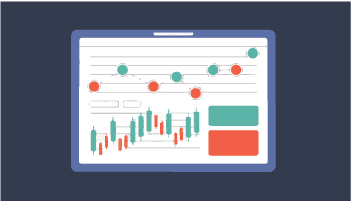
Choosing the right trading platform is key to a smooth trading experience. The best platform for you depends on your trading style, the tools you need, and how you prefer to access the markets.
MetaTrader 4 (MT4) remains a top choice for forex traders who value a simple, reliable platform with support for automated trading through Expert Advisors (EAs).
TradingView has surged in popularity, especially in the U.S., thanks to its intuitive interface, advanced charting, social trading features, and easy access via web browsers and mobile apps. It’s an excellent choice for visual traders and those who value a collaborative environment.
MetaTrader 5 (MT5) offers more timeframes and asset classes compared to MT4, making it a solid option for traders looking to branch out beyond forex into futures or commodities.
Many brokers also offer their own proprietary platforms, which may include built-in tools, unique features, or seamless account integration.
Before committing, test the platform using a demo account to ensure it suits your strategy, whether you prefer manual trading, automation, or copy trading.
4. Find the Markets You Need
All the brokers we cover offer forex trading, but they will usually offer other instruments as well. For example, the broker may allow you to open positions on ETFs, mutual funds, stocks, cryptocurrencies, and more.
Before you sign up for a broker, check to make sure they provide the exact markets you want to trade. Consider those you might be interested in in the future too.
5. Check the Broker Let’s You Trade How You Want
While all brokers in the US provide access to the spot forex market, some may also have a selection of additional products to complement your trading strategy.
Depending on the broker, you may also be able to trade:
- Precious metals like gold and silver
- Futures contracts, including forex, commodities, or indices
- Options on selected markets
- Equities and ETFs through affiliated or full-service platforms
Larger firms like Charles Schwab may provide access to a wider product range, including stocks, ETFs, and mutual funds, alongside forex through integrated accounts.
Before choosing a broker, make sure they offer the markets you’re currently interested in, and consider whether they support products you may want to explore later, such as futures or metals.
6. Work with Supportive Brokers
You are the client of your chosen broker, and so that broker is obligated to support you. Ensure this really is the case, review their published support channels, timeframes, and contact information.
Then, road test these support channels. Check they are actually able to give you the type of support they advertise, when they advertise it.

Can You Trade Futures With MT4?
No, MetaTrader 4 does not support futures trading. MT4 was designed primarily for spot forex and CFDs (although CFDs are not available to trade in the U.S.), not exchange-traded futures. Some brokers advertise “futures-style” products on MT4, but these are typically CFDs, not true futures contracts.
If trading futures on a MetaTrader platform matters to you, you’ll want to go with MetaTrader 5. A small number of brokers, such as StoneX Futures offer genuine futures trading through MT5, which is extremely rare in the industry.
What Futures Brokers Are Best For Beginners?
The best futures brokers for beginners are those that keep costs simple and provide strong education and support.
Plus500 is a good example, as it offers low commissions, no platform or market data fees, and a very easy-to-use interface.
Charles Schwab is another solid choice for beginners, especially if you value phone support and want to try paper trading before you risk your money.
What Futures Broker Offers A Demo Account?
Several futures of best forex demo accounts or paper trading accounts. StoneX Futures provides a 28-day demo account, which is useful for testing both the platform and futures strategies. Charles Schwab also offers paper trading, allowing you to practice without funding an account. Demo access is valuable for learning contract sizing, margin requirements, and order execution before trading with real money.
What fees do futures brokers charge?
Costs for trading futures vary by broker but generally include a per contract commission plus exchange and clearing fees. Brokers typically charge a commission per contract per side, with many ranging from around $0.70 up to several dollars per side, depending on the broker and contract type.
In addition to commissions, futures trades incur exchange and clearing fees set by the marketplace and clearinghouses, which are passed through to the trader and can add a modest amount per contract traded.
Futures trading is also margin based, so instead of paying the full value of a contract up front, you post a margin requirement. Margin rates vary by broker and contract, but many futures brokers offer competitive margin rates, often a small percentage of the contract’s notional value, especially for intraday trading.
If you are comparing costs across different markets, you may also be interested in our guide on low spread forex brokers, which explains how spreads and trading costs work in the forex market.
Differences Between Futures And Forex Trading
Futures and forex trading both allow you to speculate on price movements, but they differ in structure, costs, regulation, and risk.
To help you decide which method is right for you, we have outlined the key differences between futures and forex trading below:
- Market Structure Futures are traded on regulated exchanges like the Chicago Mercantile Exchange (CME). Contracts are standardized in terms of size, expiration, and settlement. Forex is traded over the counter, meaning prices and liquidity are provided by brokers or liquidity providers rather than a central exchange.
- Position sizing and risk Forex lets you trade very small sizes. You can risk a few dollars per trade, which makes it easier for beginners to get started without risking much capital. Futures are larger contracts, although micro and nano futures also allow you to get into slightly smaller positions.
- Costs and Pricing Forex costs are often hidden in the spreads and swap fees, so it’s not always easy to know what you’re paying. Futures costs are explicit. You pay a fixed commission per contract, and that’s it. Many traders prefer futures once they start trading more frequently because costs are easier to track.
- Contract Expiration Futures contracts expire on set dates, requiring traders to roll positions forward if they want continued exposure. Forex positions do not expire and can be held indefinitely, subject to rollover costs.
Which Should You Choose?
Forex is often better if you are brand new and want maximum flexibility with small position sizes and fewer rules. Futures make more sense once you care about clear costs, defined risk, and structured trading, especially if you plan to trade consistently and track performance seriously.
See our full U.S. best forex brokers comparison to decide which forex broker is right for you.
Our reviews are reader-supported. We may receive payment when you click a link to a partner site. Learn how we make money.
FAQs
What futures broker is best for institutional trading?
How does futures trading work?
How do you manage risk in futures trading?
How do traders profit from futures trading?
Are there built in risk tools when futures trading?
About the author

Justin Grossbard is the CEO & Co-Founder of CompareForexBrokers established in 2014, along with Noam Korbl and works as Strategic Head Of Research.